Concrete Surface Preparation
Proper preparation helps a garage floor coating bond to the concrete, look better, and last longer.
Why surface prep matters
Even a high-quality coating depends on the concrete beneath it. If the surface is dirty, weak, too smooth, damp, or poorly bonded to an old coating, a new system may not adhere properly.
Why Preparation Matters So Much
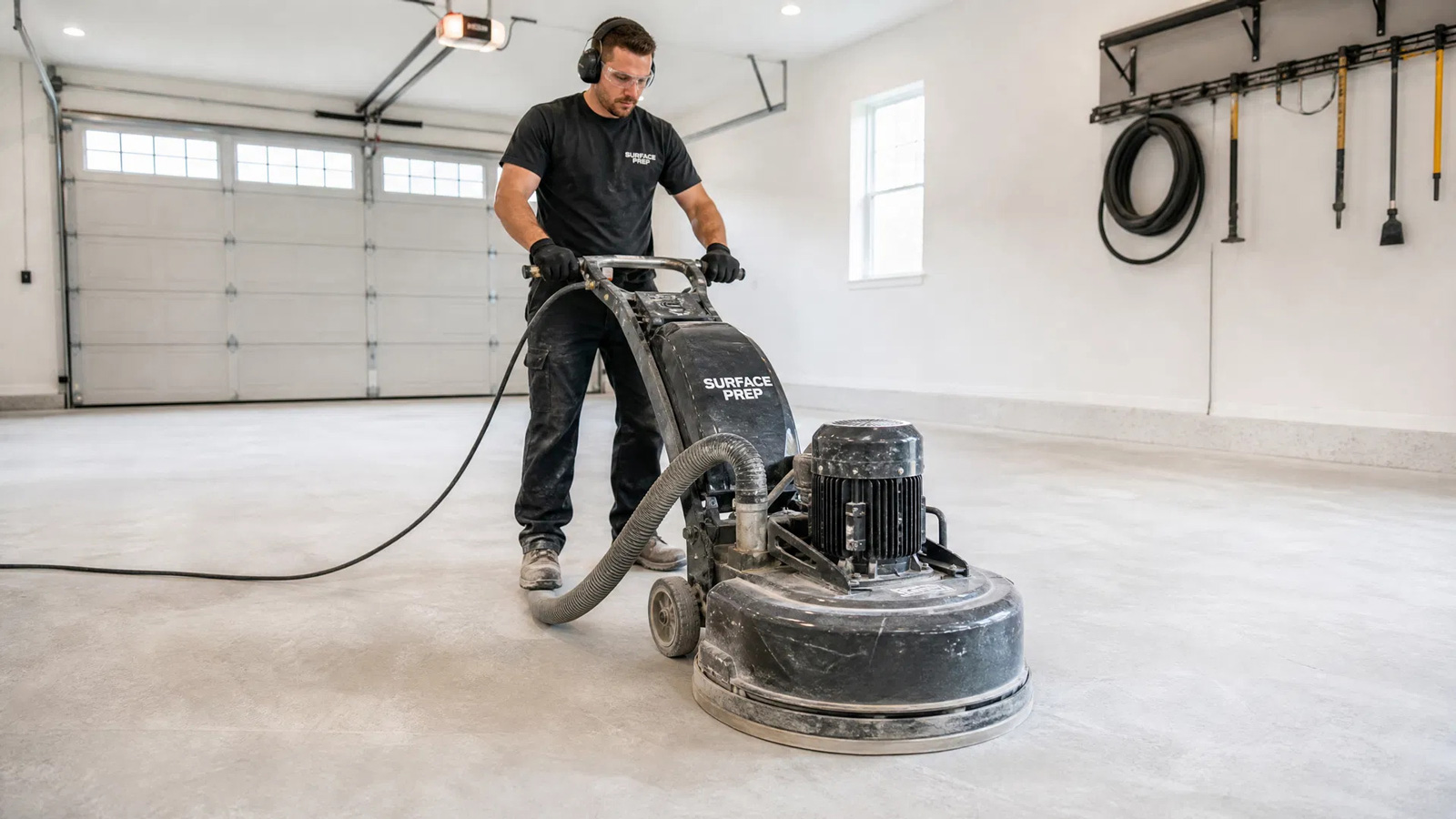
Concrete can contain dust, weak material, old coatings, stains, moisture, or a dense surface layer that makes bonding difficult. Professional preparation removes weak or contaminated material and creates a suitable surface profile.
In Stamford and southwest Fairfield County, winter road salt, wet tire runoff, freeze-thaw wear, and seasonal moisture add useful reasons to inspect the slab before coating.
Mechanical grinding is commonly used to create a consistent profile while the installer evaluates cracks, stains, old coatings, and other conditions that affect long-term performance.
What Professional Surface Prep May Include
Every garage floor is different. The preparation process should follow an evaluation of the concrete and the selected coating system.
- Cleaning the concrete to remove dust, dirt, salt residue, and other contamination
- Removing old coatings, sealers, or failing material when needed
- Repairing cracks, chips, pitting, or surface damage
- Addressing oil stains, moisture concerns, or other adhesion risks
- Creating the right surface profile for the selected coating system
Common Concrete Issues and How They Are Handled
During an estimate, a floor should be reviewed for conditions that can affect preparation, system choice, timing, and cost.
Oil and Grease Stains
Automotive fluids can soak into concrete and interfere with adhesion. Depending on severity, cleaning, mechanical preparation, or additional treatment may be needed.
Cracks and Spalling
Small cracks, chips, pitting, and spalled areas may need repair before coating. Larger cracks or significant damage may need further evaluation.
Moisture Vapor Transmission
Moisture moving through a slab can affect adhesion and long-term performance. Previous coating failure, damp areas, or vapor concerns deserve review before a system is selected.
Existing Coatings or Paint
Old paint, sealers, or coatings may need removal or mechanical preparation. The correct approach depends on bond, contamination, and compatibility with the new system.
Winter Salt and Wet Runoff
Stamford-area garages can collect deicing salt, snowmelt, and wet tire runoff. Contamination and damaged concrete should be addressed before coating begins.
New Concrete
New concrete needs time to cure before coating. The required timing depends on the slab, moisture conditions, and selected system.
Related Guides
Ready to Talk About Your Garage Floor?
Call to discuss your floor's condition, coating options, and the type of preparation that may be needed before it is coated.