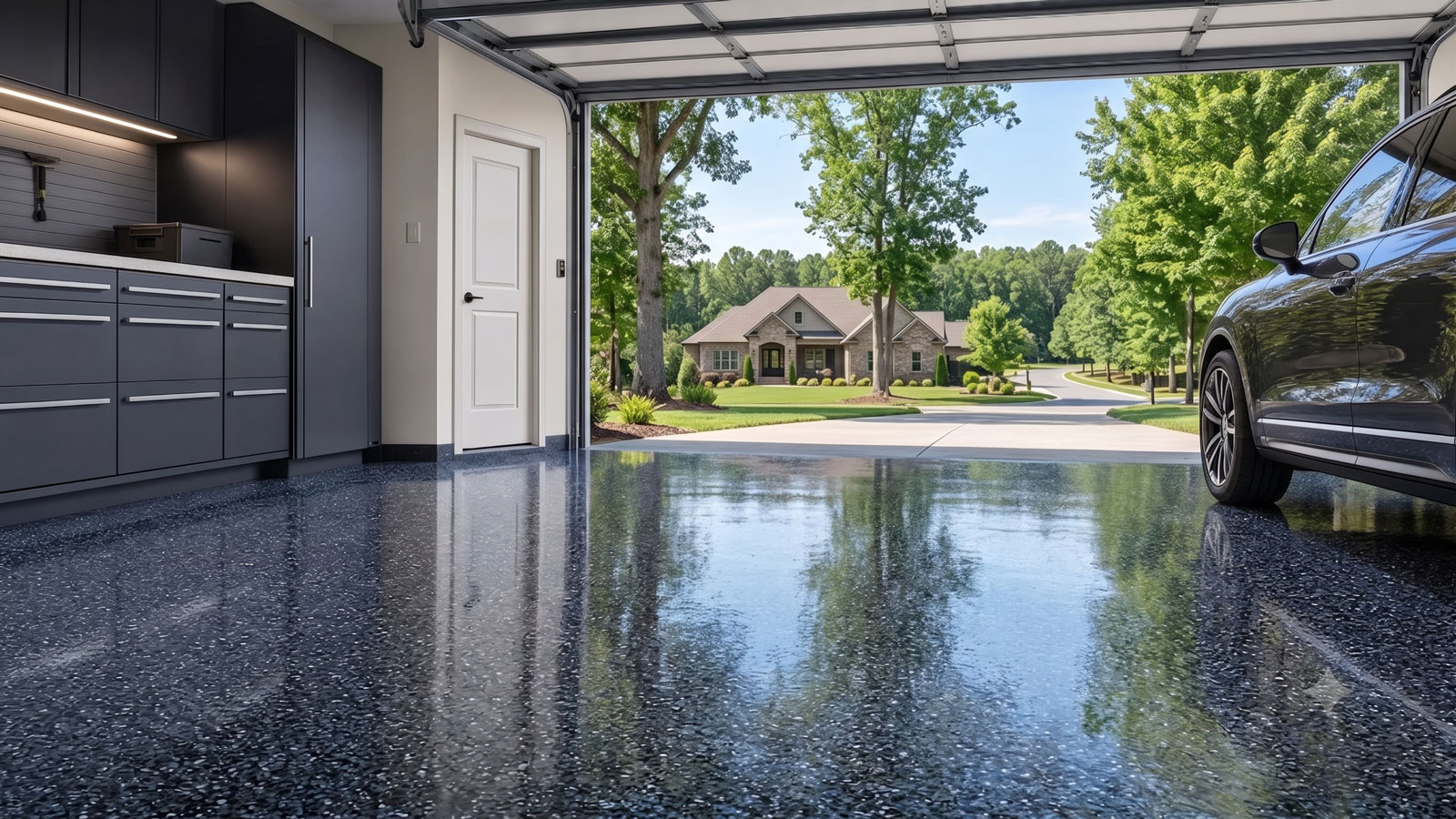
Garage Floor Coating in Wilton, CT
Floor Coating Services in Wilton, Connecticut
Wilton has a distinctive inland garage-floor context shaped by its river valley, wooded residential neighborhoods and houses from different construction periods. The town's Plan of Conservation and Development became effective October 1, 2019. It describes land-use and environmental priorities rather than assuming that all homes share the same site conditions. A floor serving a detached garage near an established road may be much older—or much newer—than the house, while a later attached slab can have builder sealer or control joints that change preparation.
Water management is another specific Wilton issue. The 2019 plan notes a 2017 stormwater-management program informed by the Norwalk River Watershed Action Plan. It also reports 56 dams in town, including two along the Norwalk River. These are documented regional water-resource facts, not evidence of water entering a particular garage. The direction of each driveway, roof drainage, threshold and visible concrete moisture must be checked at the property.
Winter meltwater, grit and deicing residue add regular garage cleanup even when there is no drainage problem. Epoxy, polyaspartic and decorative-flake systems can improve cleanability on sound concrete after appropriate grinding and repair. The project's real scope depends on prior coatings, cracks, moisture, equipment access, finish selection and the family's need to return vehicles to the space.
Local Market Insight
Wilton's 2019 conservation plan records a 2017 stormwater plan and 56 dams, two on the Norwalk River. That gives the town a distinctive inland water-resource context, but no public watershed fact determines whether an individual garage slab is damp or suitable for coating.
What Affects the Cost of Garage Floor Coating in Wilton?
A Wilton garage may be attached to a newer home, located in a detached accessory structure or reached by a sloped wooded driveway. Those differences affect old-finish removal, access, edge detail and any crack-repair work more directly than square footage alone.
The Norwalk River watershed explains why public drainage planning matters, but the quote should describe the homeowner's observed water pathways. Concrete moisture assessment, if indicated, and corrections outside the garage should not be confused with ordinary coating labor.
- Garage and pour history: Wilton homes and accessory structures span different construction periods. Check when the slab was actually poured, whether it has replacement sections and what past repairs remain.
- Paint, sealer and workshop residue: Prior paints or oils in a working garage may require removal; a newer pour may carry curing treatments. Surface identification and mechanical grinding belong in the cost scope.
- Norwalk River watershed context: The town's dams and waterway programs are public facts, not a diagnosis. Look at the driveway fall, downspout outlets, local water marks and any persistent damp slab conditions.
- Cracks and surface strength: Freeze-thaw exposure, old patches or moving joints should not be covered blindly. Differentiate stable repairable damage from active movement and unsound concrete needing separate intervention.
- Inland lot access and edges: Long drives, wooded approaches and detached garages can change staging, grinder movement and perimeter preparation. An irregular floor with steps or drains may require more work than its area suggests.
- Weather, texture and curing: Wilton's winter garage use makes traction and easy cleaning worth discussing. Check seasonal installation conditions, coating-layer details and manufacturer's parking-return guidance before agreeing to the schedule.
Call for a clear, project-specific estimate — or request one online.
Wilton's Residential Growth, Detached Garages and Concrete Generations
Wilton's adopted 2019 Plan of Conservation and Development reflects a community with an established center, different neighborhood development periods and significant environmental resources. The town also maintains planning material for its Village District and Wilton Center Area Master Plan. Those public frameworks distinguish commercial-center change from residential land-use patterns; they cannot tell when a garage slab was installed or whether an old coating remains on top of it.
At an older residential property, a detached garage may have been added or repoured decades after the house. In a later subdivision, a smooth concrete floor may look pristine but retain curing products, clear sealer or construction residues. Look for paint at tire paths, oil around parked vehicles, multiple patch colors and cracking at sections poured at different times. The actual concrete controls what grinding and repairs are needed.
Before authorizing a decorative system, ask how existing films will be removed, what surface profile the installer intends to create and how cracks, joints and door edges will be treated. A moving joint is not equivalent to a stable hairline crack. Serious surface deterioration needs assessment rather than a thick topcoat intended to hide it.
Wilton properties can also have wooded or sloping approaches and detached structures farther from the street. Clarify how equipment and waste will travel, where the family's cars will park and whether steps, storage or floor drains change the work. An estimate should reflect these differences, not simply multiply a universal price by the measured square footage.
Norwalk River, Wilton's Dams and Practical Garage Moisture Checks
Wilton's 2019 comprehensive plan offers unusually specific water information: a stormwater-management program was adopted in 2017, and the town has 56 dams according to state information, including two on the Norwalk River. The watershed also has a dedicated action plan, and local land-use review has addressed the Norwalk River Valley Trail. These documented projects show how important water systems are to Wilton's landscape. They do not establish the moisture content of any homeowner's concrete.
The homeowner should first inspect what water does around the building. Does the driveway lead rain toward the overhead door? Are gutters connected to downspouts that empty near the slab? Do wet leaves or sediment collect against drainage grates? Have floor paint blisters or dark marks appeared even after dry weather? Those observations can separate exterior runoff from possible internal substrate moisture.
An inland Wilton garage also receives snowmelt, road salt, grit and wet tires during winter. Cleanup needs are not evidence that water rises through the concrete. A continuous finish, properly bonded to sound concrete, can make that residue easier to remove, but owners should still sweep and wipe regularly. Discuss finish texture when wet footwear and slush are part of everyday use.
If rainwater comes through a door, address drainage or the threshold before coating. If the slab itself remains damp, investigate its suitability under the chosen coating-system requirements. Then decide the grinding, repairs, primer, base layer, flake and topcoat. A Wilton estimate should be grounded in these actual property conditions rather than assuming that proximity to a river or dam predicts garage-floor performance.
Frequently Asked Questions
Do Wilton's 56 dams suggest my garage has a moisture problem?
No. The dam count documents the local river and water-management landscape; it does not test private concrete. Examine actual runoff, drains, water marks and the slab before attributing a garage issue to the Norwalk River watershed.
Does an older Wilton home automatically need more concrete repair?
No. A garage can have a later replacement floor, and new concrete can retain builder sealers. Inspect old coatings, cracks, patches and adhesion conditions rather than using the house's age as a proxy.
Can an epoxy floor prevent winter slush from making a mess?
It can make cleaning sound concrete easier when properly installed, but vehicles still bring slush and deicing grit into the garage. Sweep away debris and remove standing meltwater instead of expecting a maintenance-free surface.
What should a Wilton floor-coating bid include?
Look for surface-film removal, grinding, crack and joint treatment, moisture evaluation where warranted, edges and drains, system layers, texture and cure timing. Include equipment access if a detached garage sits far up a drive.
Should drainage work happen before installing the finish?
Yes, when runoff enters the garage. A decorative floor system cannot redirect water flowing down a driveway or from a downspout. Solve the exterior pathway and evaluate the concrete before applying a new coating.