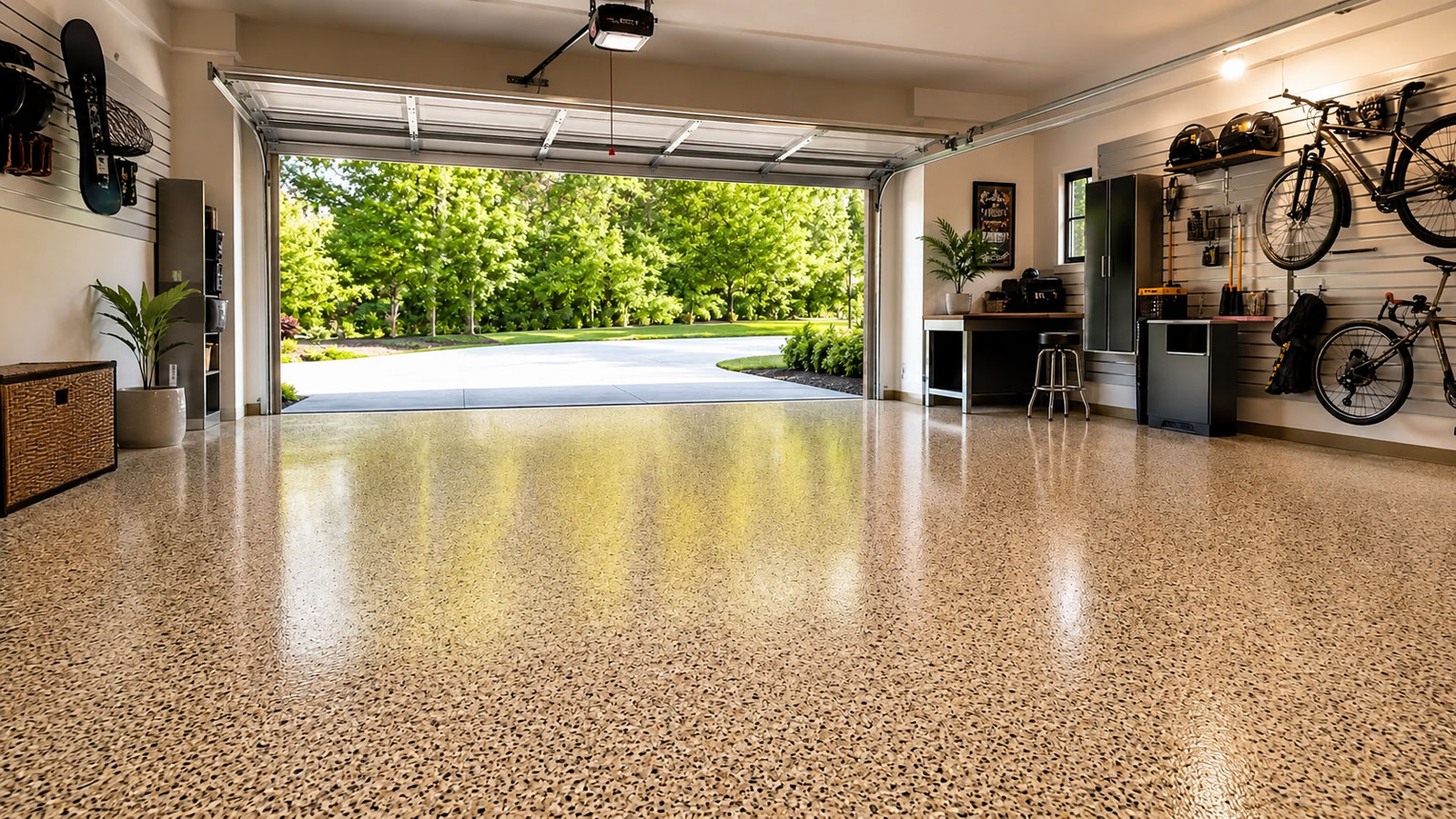
Caring for Your Garage Floor Coating
A professionally installed floor coating is designed to be low-maintenance. Here is how to keep it clean, protected, and ready for Connecticut's seasons.
The Good News: It Is Easy
A coated floor is easier to sweep, mop, and maintain than bare concrete. Regular cleaning removes grit and helps protect the finish from unnecessary abrasion.
For most homes, basic cleaning with water, mild detergent, and a soft mop or brush is enough. The main goal is to keep road salt, wet runoff, leaves, pollen, soil, oils, and other debris from lingering on the surface.
Avoid harsh or abrasive cleaning. Strong acids, bleach, aggressive degreasers, wire brushes, and abrasive pads may dull or damage the finish.
Routine Maintenance Tasks
Sweep or dust mop
Remove loose dirt, dust, leaves, pollen, and grit with a soft-bristle broom or microfiber dust mop so abrasive material is not ground into the surface.
Damp mop with mild cleaner
For a deeper clean, use warm water and a mild floor cleaner. Avoid harsh acids, bleach, ammonia, wire brushes, and abrasive pads.
Clean up spills
Wipe up oil, gasoline, brake fluid, road salt, deicing residue, and other automotive or household spills as soon as practical.
Rinse away salt and wet runoff
Clean away tracked salt, snowmelt, sand, and grit from wet tires or footwear. These materials can be abrasive if left on the floor.
Check for chips or wear
Look for chips, scratches, dull areas, or unusual wear. Minor issues are often easier to address when noticed early.
What to Avoid
A coated garage floor is durable, but harsh chemicals, abrasive tools, and prolonged exposure to certain materials can dull or damage the finish over time.
Stamford-Area Maintenance Considerations
Local climate and seasonal use create a few practical maintenance considerations for garage-floor coatings.
Winter Salt and Snowmelt
Stamford and southwest Fairfield County garages receive tracked deicing salt, wet tire runoff, and snowmelt. Rinse or mop these materials away after winter weather rather than allowing residue to dry on the surface.
Seasonal Moisture
Coastal and inland Connecticut conditions can bring wet vehicles, humidity, rainfall, and repeated moisture cycles. If moisture appears to come through the slab or a coating develops unusual problems, arrange a concrete evaluation.
Freeze-Thaw Exposure
Inland parts of the territory may experience more pronounced freeze-thaw conditions than immediate shoreline communities. Keep an eye on existing cracks, spalls, and changing damage around the garage entrance.
Pollen, Leaves, and Soil
Eastern deciduous landscapes bring seasonal pollen, leaf debris, and soil into residential garages. Regular sweeping helps keep abrasive debris from collecting on a coated floor.
Recommended Cleaning Approach
Related Guides
Questions About Your Garage Floor?
Call to talk through maintenance, repairs, recoating options, or next steps for your garage floor.