Garage Floor Coating in Weston, CT
Floor Coating Services in Weston, Connecticut
Weston's garage-floor decisions take place in a low-density, inland town with wooded residential lots, an established center and a substantial history of local conservation planning. Its 2020 Plan of Conservation and Development followed public participation in 2019, including a town-center traffic study dated October 10, 2019 and earlier resident surveys. That setting means floor projects may involve detached garages, long approaches, past home additions or irregular slab layouts. A house's age and a garage's concrete age are not necessarily the same.
Water planning also has a documented place in Weston. The town maintains a stormwater-management program that took effect July 1, 2017 and publishes annual municipal stormwater reports. The wider Saugatuck River landscape helps explain why driveway runoff and land drainage deserve attention; it does not establish dampness in a specific garage. The direction of roof runoff, slope of the approach and history of water crossing the threshold need to be checked on site.
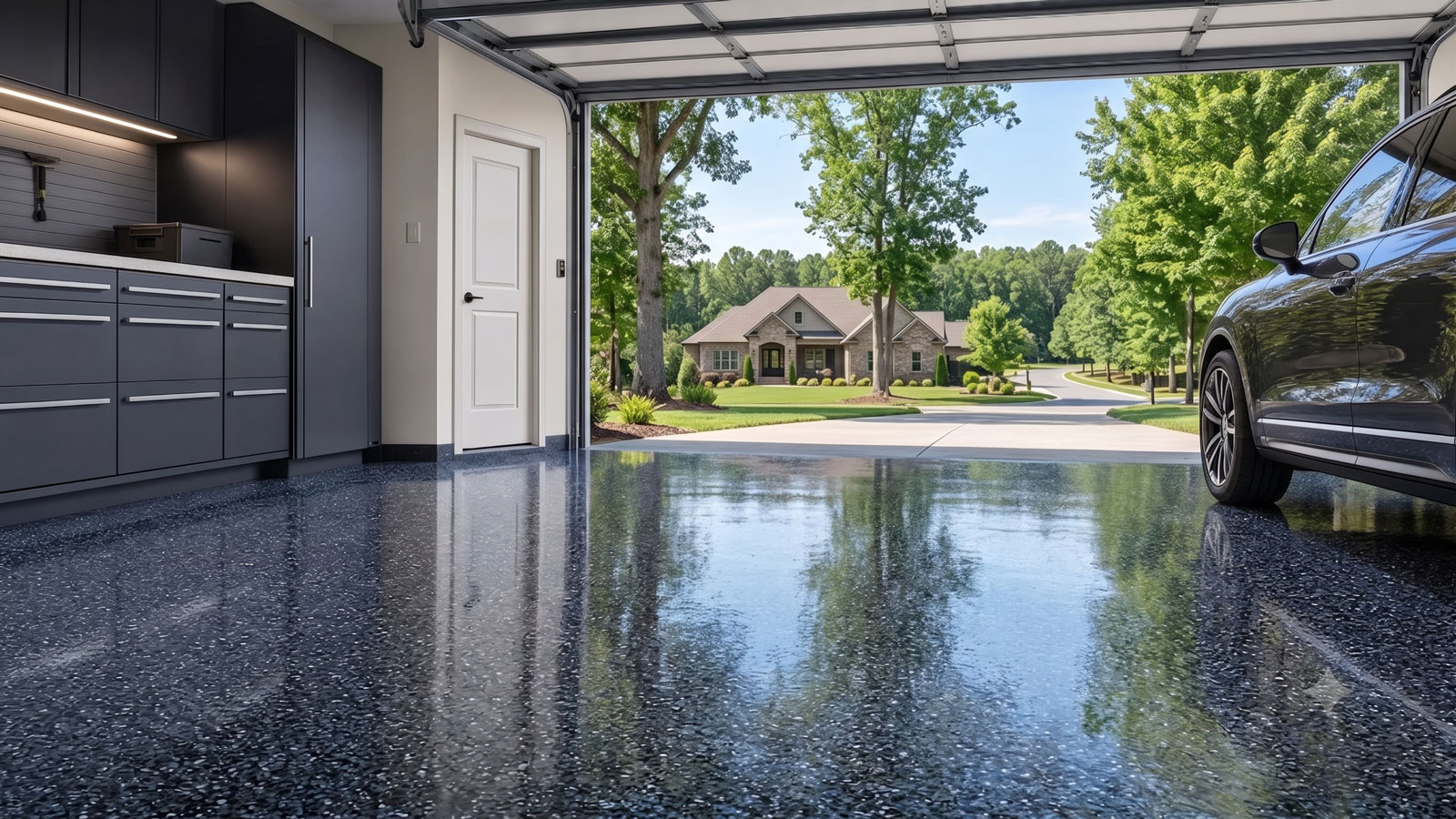
For a sound slab, a professionally installed epoxy, polyaspartic or decorative-flake finish may make ordinary cleaning easier. First inspect old paints, oil, patches, cracks and any persistent moisture; then discuss coating chemistry, texture, weather conditions and cure time. No decorative surface can repair active structural movement or redirect stormwater descending toward the garage.
Local Market Insight
Weston's 2020 town plan, 2019 center traffic study and stormwater program effective in 2017 reflect an inland community concerned with access, land development and runoff. These public facts make site-specific driveway and garage-layout checks worthwhile, without proving defects in private concrete.
What Affects the Cost of Garage Floor Coating in Weston?
Two Weston garages with the same footprint can differ greatly in equipment access, storage removal and concrete preparation. A detached building reached along a wooded drive may need more staging than an open attached bay. Old patch compounds or previous paint add different work from new slab profiling.
The town's 2017 stormwater framework does not substitute for looking at a property's actual runoff. Separate drainage correction, if necessary, from grinding, crack repair, perimeter detail and decorative system selection.
- Garage additions and slab age: Weston's established residential properties may have additions or replacement garages. Verify slab chronology and existing condition rather than assuming the concrete matches the main house's construction date.
- Past paint and work residue: Garage workshops and long-used parking spaces can retain oil, floor paint or previous patch materials. Inspect for bond-inhibiting films and include removal or surface profiling as needed.
- Driveway and stormwater slope: Weston's stormwater plans describe public runoff practices, not a home's slab. Check long driveway gradients, gutters, doors and moisture indications before defining preparation or exterior repair work.
- Cracks, patches and joints: A prior floor repair or moving joint needs appropriate evaluation. Quote stable crack preparation separately from serious deterioration and drainage-related damage requiring another remedy.
- Equipment and staging access: Wooded lots, narrow gates, distant outbuildings and steps can alter grinder access, material handling and perimeter time. Include these logistics in the written estimate.
- Finish and household use: Texture for wet boots, grit and daily parking should be chosen alongside decorative appearance. Confirm the full layer schedule and manufacturer-specific application and return-to-vehicle times.
Call for a clear, project-specific estimate — or request one online.
Weston's Wooded Residential Lots and Varied Garage Construction
Weston's 2020 Plan of Conservation and Development grew from a public planning process that included 2018 survey work and multiple 2019 community sessions. The town also commissioned a center traffic study in October 2019. These records speak to a community managing its small center, residential land-use patterns and access while retaining a relatively low-density character. They do not reveal whether a particular garage is attached, detached or built over a replacement floor.
On some properties, a later outbuilding can have a newer slab than the house; elsewhere, an attached garage may contain older paint and repair sections from repeated use. Ask whether there are multiple pours, surface coatings, repaired cracks, stains or water marks. An installer should look at the threshold, edges and joints as carefully as the clear parking area. Floor condition determines the necessary preparation, not the style of the property.
Weston's landscape can also affect access. A long drive, tight turn, uneven path or garage set behind landscaping changes the time needed to move grinding equipment and materials. Workshop contents, steps and complicated perimeters may make the job less straightforward than an identical-size open bay near a street. Those differences belong in the quote, along with old-film removal and any repairs.
Once the slab is assessed, compare coating systems on their complete preparation and layer requirements. A finish selected only for quick curing or high gloss is a poor substitute for a sound bond, appropriate traction and a manageable return-to-parking plan. The town's land-use character is relevant precisely because property layout and floor histories differ.
Weston's Stormwater Program and Real Garage-Entry Conditions
Weston maintains a municipal stormwater-management program effective July 1, 2017 and makes annual MS4 reporting available, including later drafts and reviews. The broader Saugatuck watershed and the town's conservation work provide a substantial public framework for surface-water stewardship. This is useful local context, but it is not evidence that a given garage receives runoff or suffers vapor transmission through the slab.
Homeowners can learn more by inspecting what happens on their own lot. Follow a long driveway downhill, look at the last few feet near the overhead door, check downspouts and note low spots where leaves or gravel accumulate. After rainfall, observe whether water enters through the threshold. Indoors, look for persistent dark areas, peeling floor paint and unusual surface deterioration. A water path at the door is a different problem from moisture within concrete.
Seasonal conditions create a second, ordinary garage-floor burden. Vehicles carry water, dirt and winter deicing grit onto floors, even where exterior drainage is sound. A properly installed coating on good concrete can make those deposits easier to clean, but sweeping, removing standing liquids and selecting useful wet-surface traction remain necessary. A decorative flake finish should be discussed in terms of cleaning and real use, not just appearance.
Where there is observed water entry, address drainage or threshold work before paying for the finish. Where a slab remains damp, evaluate it against the intended system's requirements. Then scope mechanical profiling, repairs, edges, primer or base layers, flakes and topcoat. That sequence turns Weston's real terrain and stormwater considerations into practical decisions without treating public watershed records as a private property diagnosis.
Frequently Asked Questions
Does Weston's wooded terrain mean my garage has moisture damage?
No. The town's stormwater and land-conservation programs describe public conditions, not individual slabs. Check actual grade, roof runoff, past water entry and concrete appearance before deciding whether a moisture investigation is needed.
Are detached Weston garages harder to coat?
Sometimes access or surface history can increase work, but not automatically. A detached building may have long equipment approaches, older paint or steps; another could have sound recent concrete. Price the actual conditions.
Can epoxy stop rainwater running down a long driveway?
No. If the approach channels water under the garage door, grading, drainage or threshold changes are separate work. The coating should follow correction of active water entry.
What should a Weston coating estimate include?
Ask for existing finish removal, mechanical grinding, crack treatment, perimeter edges, moisture assessment when warranted, each layer, texture and vehicle-return timing. Have the contractor explain any added staging cost for a distant or tight-access garage.
How do I care for a finished floor after snowy weather?
Sweep away grit and deicing residue and remove standing meltwater. A sound coating can simplify cleanup, but winter traffic and moisture still require maintenance and adequate exterior drainage.