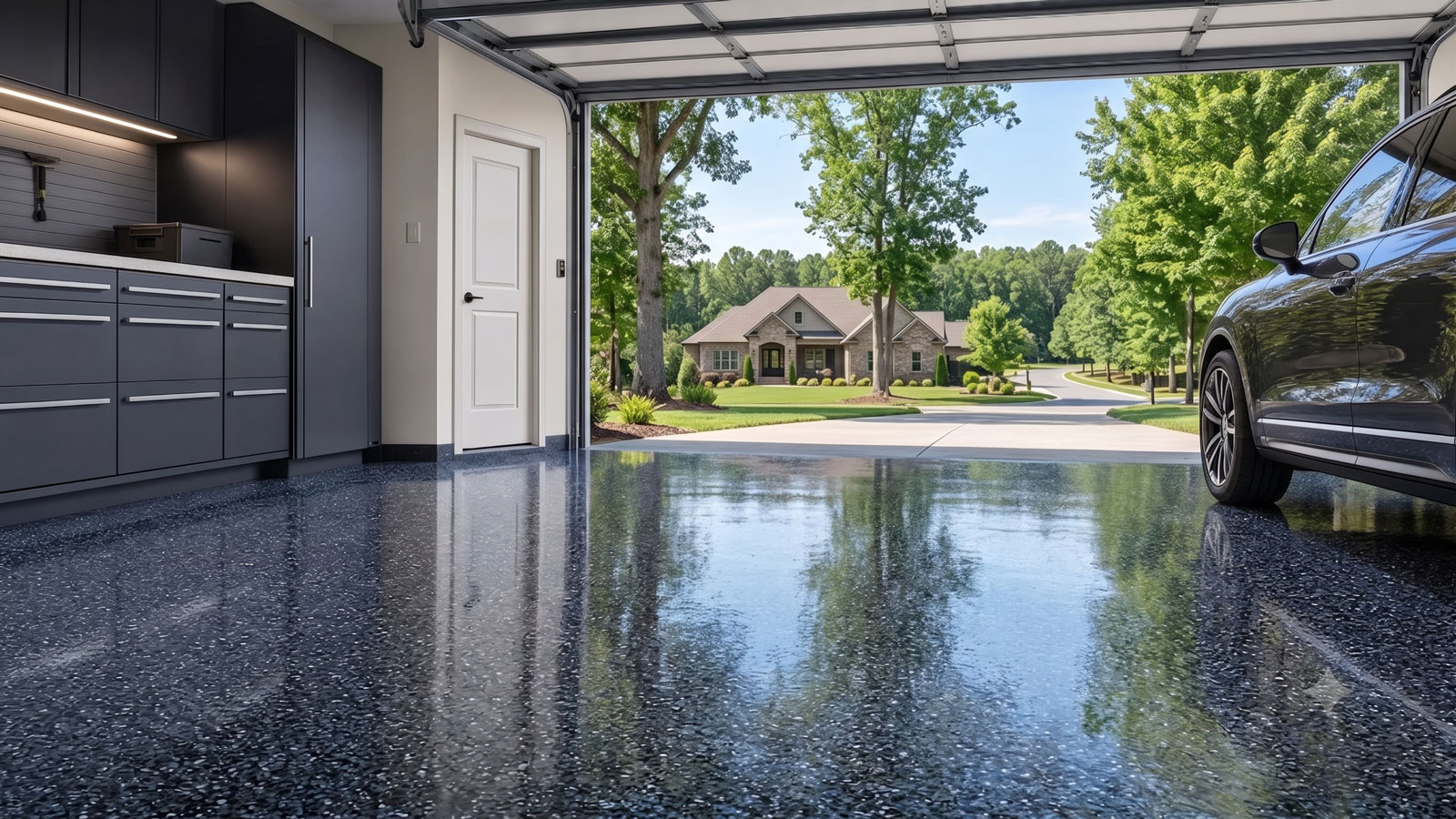
Garage Floor Coating in Stamford, CT
Floor Coating Services in Stamford, Connecticut
Stamford's garage floors sit within a city whose development patterns are more varied than the surrounding suburban towns. The Stamford 2035 Comprehensive Plan addresses land use, housing, transportation and infrastructure across established neighborhoods and newer redevelopment areas. Downtown and the South End are not interchangeable with detached-home districts farther north. A homeowner should therefore describe the actual garage—attached or detached, original or altered, previously painted or bare—rather than expecting the same surface-preparation scope on every street.
Stamford also occupies the Long Island Sound coastal area, but flood and stormwater exposure changes sharply by location and driveway elevation. The city has a South End neighborhood study from 2018 and a 2024 transit-oriented development framework near its transportation center. Those documents illustrate distinctive land-use and drainage contexts, not conditions underneath a private concrete floor. Rainwater entering at a garage door and moisture rising through a slab are separate problems that require separate investigation.
For a Stamford coating project, the essential decision is what must be corrected before the finish goes down. A patched older slab, a new poured floor with curing treatments and a garage that repeatedly takes runoff can each demand different work. Epoxy, polyaspartic and decorative-flake systems can improve the cleanability of sound, prepared concrete, but none can substitute for drainage repair, sound substrate or the manufacturer's application conditions.
Local Market Insight
Stamford combines coastal redevelopment, a major rail-station district and inland residential neighborhoods. Its 2035 plan and separate South End and transit-oriented studies document those different settings. Garage-floor scope depends on the actual slab history, access and water-entry conditions, not a citywide description.
What Affects the Cost of Garage Floor Coating in Stamford?
Two Stamford garages of equal size can generate very different estimates. A South End property with older coatings, a rear accessory garage or limited equipment staging may involve more removal and perimeter work than a straightforward attached garage. A newer slab may still need curing compound or sealer identified and mechanically prepared.
Near the waterfront, drainage planning deserves special attention, but maps alone cannot determine private slab moisture. Ask for repairs, surface preparation, water investigation and decorative selections to be identified as separate line items instead of treating everything as a single coating price.
- Concrete and building history: Stamford's established districts, South End redevelopment and newer residential construction mean house age does not reliably date a garage pour. Ask which prior finishes, patches and slab sections actually need preparation.
- Old coatings and surface films: An altered detached garage may contain layers of old paint or oil residue; a later floor can retain sealer. Identify the existing treatment and include removal or profiling in the written scope.
- Coastal and driveway drainage: Long Island Sound and urban drainage planning are regional facts, not proof of garage flooding. The installer should check actual threshold grade, runoff marks and moisture indications before specifying a floor system.
- Cracks, joints and repair edges: Repairs at an older Stamford garage door, control joints in recent concrete and failing patches should be evaluated separately. Stable defects may be prepared; ongoing movement needs a different solution.
- Access and staging: City lots, side-entry garages and rear structures can require more equipment movement and edge work than open suburban driveways. Clarify doorway width, storage removal and where cars will park during curing.
- Coating finish and return to use: Daily commuting and household access can make cure timing important. Compare texture, topcoat and cleaning needs, then obtain the proposed system's specific temperature and vehicle-return requirements.
Call for a clear, project-specific estimate — or request one online.
Stamford's Different Building Districts Mean Different Slab Histories
Stamford's current comprehensive planning reaches across a city with a major rail station, waterfront redevelopment and extensive residential territory. The 2018 South End Neighborhood Study focuses on a district with a distinct development and transportation history, while the 2024 transit-oriented regulations address another form of land use. Both differ from garages in inland neighborhoods where a homeowner may have an attached two-car space, a detached accessory building or a floor that has been repoured following a renovation. None of those public documents identifies the coating on a specific slab.
That distinction affects how bids should be compared. An old house is not evidence of an old garage floor; likewise, a newer-looking space may have hidden curing compounds or an old coating beneath stored items. During inspection, look for differences in color and texture between slab sections, previous crack fillers, paint peeling near tire paths and soft or deteriorated concrete near the door. Those observations tell an installer far more than the home's listing age.
A homeowner considering a decorative flake finish should ask whether the estimate includes all preparation rather than assuming that a premium topcoat fixes the base. Mechanical grinding, selective stripping, treatment of stable cracks and attention to edges can account for meaningful labor differences. In tightly arranged city properties, access to the grinder and a clean place for equipment may affect time as much as square footage. Record those factors before deciding whether two proposals describe comparable systems.
Stamford's Coast, Stormwater and Winter Garage Use
Stamford lies in Connecticut's statutory coastal area, yet exposure is not uniform across the municipality. Low-lying South End and harbor-adjacent conditions cannot be applied to an inland garage simply because both have Stamford addresses. Coastal planning concerns river, harbor and drainage infrastructure; it does not establish whether an individual garage takes rainfall at its threshold or whether its concrete has excess internal moisture. Those questions need direct examination.
Start outside the garage. Follow the driveway grade, look at downspout outlets, check whether leaves block drains and note any water marks around the door. Then look inside for persistent dark patches, old coating blisters, white residue and deteriorating perimeter edges. Water that runs into the opening during storms is an exterior drainage issue. Water or vapor moving within the slab is a separate adhesion concern. A decorative coating cannot reliably solve either problem without identifying its cause.
Seasonal parking adds routine mess even in garages with no flood exposure. Vehicles bring rainwater, winter slush, grit and occasional deicing residue onto the floor. A well-selected coating can make cleanup easier on a sound concrete base, but traffic grit and standing liquids still need attention. Ask about traction when wet, cleaning practices and whether the selected system can be installed during the anticipated temperature and humidity conditions.
Before approving the project, request a specific plan for cleaning, mechanical surface preparation, repair materials, any moisture testing that conditions warrant, primer or base layers, flakes and topcoat. Verify that driveway runoff or structural water entry—if observed—is addressed outside the coating bid. This is the practical meaning of adapting a floor finish to Stamford rather than merely inserting the city's name into a generic estimate.
Frequently Asked Questions
Does a Stamford South End location mean my garage will flood?
No. The South End is the subject of specific planning and redevelopment work, but local elevation, drainage, thresholds and individual building details determine water entry. Check the property itself rather than interpreting a citywide coastal designation as a floor diagnosis.
Is a newer Stamford garage easier to coat than an older one?
Not necessarily. A later pour may have curing treatments or sealers, while an older floor may be bare and sound. Ask the installer to identify coatings, moisture concerns, damage and movement before assigning a preparation scope.
Can a coating fix water entering under my garage door?
No. If the driveway sends stormwater toward the opening, grading, drainage or door-threshold work may be needed first. Epoxy and polyaspartic finishes are not substitutes for controlling exterior water.
What should I compare between two Stamford estimates?
Look beyond garage dimensions. Compare stripping and grinding, crack repairs, edge details, system layers, finish texture, moisture investigations where warranted and manufacturer-based parking times. Restricted rear-garage access can also change labor.
Will a coated Stamford floor eliminate winter cleanup?
No. Road grit, slush, water and salt residue should still be removed. The benefit of a properly prepared, intact coated surface is easier cleaning, not immunity from seasonal contamination or poor exterior drainage.