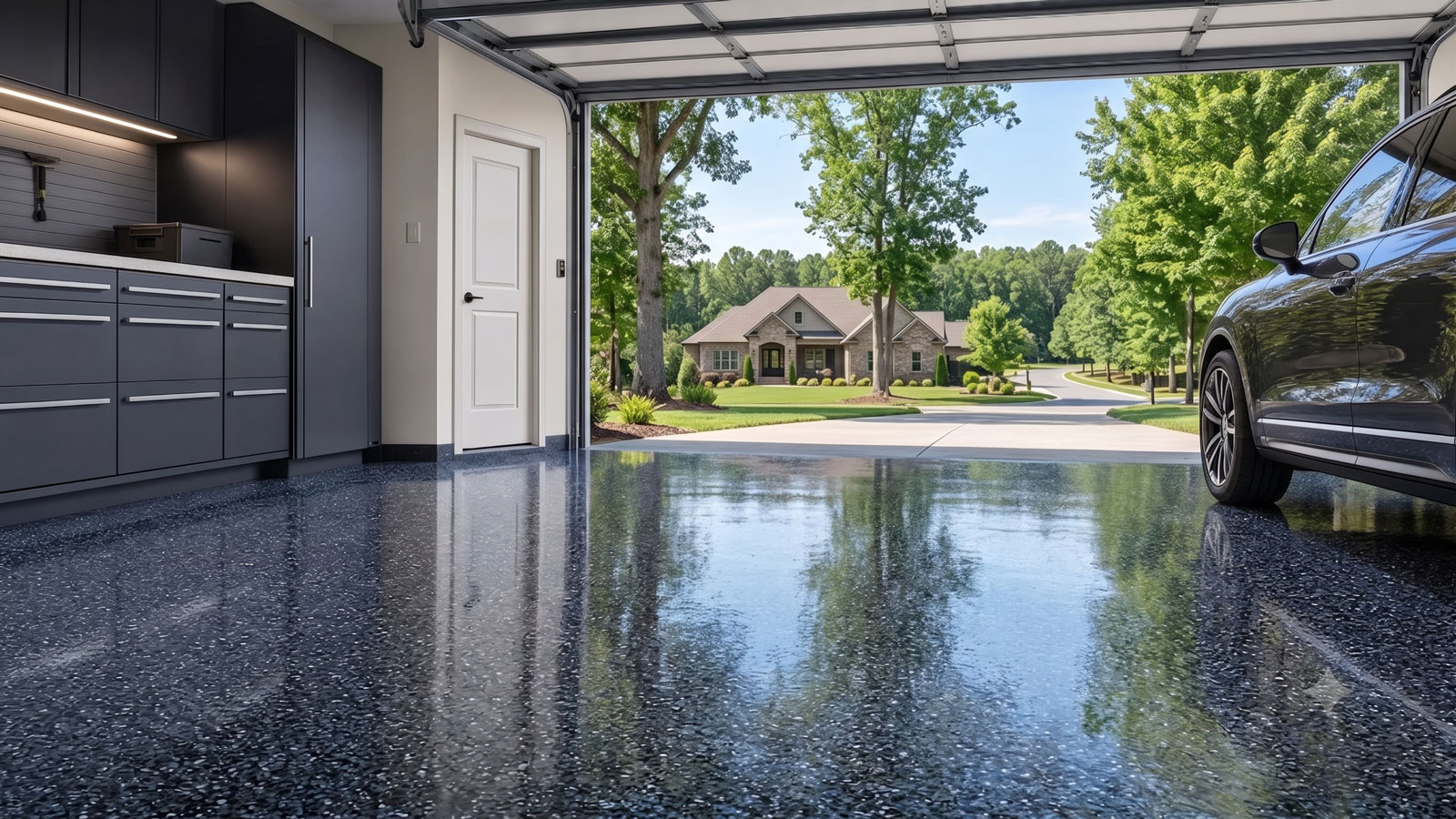
Garage Floor Coating in Westport, CT
Floor Coating Services in Westport, Connecticut
Westport's garage-floor work crosses an established town with coastal neighborhoods, inland residential streets and a river-centered Saugatuck district. Its 2017 Plan of Conservation and Development was adopted September 28 and became effective October 22 of that year. It addresses coastal areas, natural resources, residential development, transportation and infrastructure rather than presenting all properties as a single housing type. A garage beside an older house may have been added or repoured years later, while a newer attached floor can contain sealer or curing compounds that still require preparation.
The Saugatuck River and Long Island Sound provide distinctive local drainage context. Westport's coastal and flood planning includes proposed development near Riverside Avenue and Railroad Place where flood elevations and tidal resources received substantial review. Such information is important for municipal planning, but it cannot establish whether an individual household's garage floods or whether a slab contains moisture. Door grade and site water history need separate inspection.
A properly installed epoxy or polyaspartic finish can improve cleaning and everyday use of sound concrete. Before selecting a decorative-flake look, assess previous floor paint, oil, cracks, patches, drains, threshold conditions and access. A surface coating is not a drainage system; an estimate should address the floor that actually exists.
Local Market Insight
Westport's adopted 2017 plan addresses its Saugatuck River, coastal areas, residential growth and infrastructure. The town's review of riverfront redevelopment documents real flood-design issues in certain sites. Those public records support checking property-level drainage without assuming that every Westport garage is wet.
What Affects the Cost of Garage Floor Coating in Westport?
Westport properties vary from village and Saugatuck-area lots to more expansive residential approaches. Old coatings, accessory garage access, concrete replacement sections and difficult perimeter details can all affect labor independently of floor size.
Nearby flood zones and riverfront development plans are context, not a diagnosis. The quote should identify actual water entry and slab condition, list repairs and grinding separately, and explain finish, texture and cure choices.
- Concrete history across neighborhoods: Established Westport houses, later garage additions and newer homes can carry different slabs and prior treatments. Verify what is original or replaced and what repairs are needed.
- Existing paint and sealer: Layers from past garage projects may require grinding or stripping; relatively recent concrete can retain curing treatments. A quote should specify the surface-profile work, not assume visible smoothness means readiness.
- Saugatuck and shoreline drainage: The river and Long Island Sound shape public flood planning, but individual thresholds vary. Investigate driveway fall, downspouts, drains and persistent concrete moisture before specifying a coating.
- Cracks, joints and deterioration: Stable cracks and old patches may be repaired during preparation, while actively moving joints or serious spalling call for other assessment. Distinguish those categories in the scope.
- Equipment and parking access: A narrow Saugatuck-side lot or rear garage may require additional staging; long residential drives create different logistics. Verify grinder access, steps and vehicle storage during the project.
- Finish for wet and daily use: Choose texture and topcoat around wet shoes, grit, sunlight and household parking. Manufacturer temperature requirements and realistic vehicle-return instructions should be part of the estimate.
Call for a clear, project-specific estimate — or request one online.
Westport's Established Neighborhoods and the Age of a Garage Floor
Westport's Plan of Conservation and Development, adopted in September 2017 and effective the following October, treats residential development, transportation, coastal management and infrastructure as separate yet connected concerns. Saugatuck, Greens Farms, downtown-adjacent neighborhoods and outlying residential areas have different building histories and layouts. These patterns are relevant when planning a garage renovation, but they do not reveal when its concrete was poured.
Ask whether the floor belongs to the original building, a later addition or a replacement garage. Previous owners may have used paint or a thin surface coating; another slab may have received curing sealer when poured. Mechanical profiling may be necessary in both cases, for different reasons. Sound concrete with a past repair patch should be examined alongside cracks, low spots and the garage-door edge. An inspector should never infer adhesion merely from a tidy appearance.
Westport property layouts also differ. A garage accessed along a tight riverside corridor may have less room for grinding machinery and waste staging than a garage on a broad residential driveway. Steps, floor drains, built-in cabinetry and complicated perimeter edges can change labor. The estimate should show whether those details, removal of old coatings and repairs are included.
Keep the coating choice downstream of that assessment. Epoxy and polyaspartic are useful categories, but system performance depends on the complete layering process and compatibility with the prepared slab. Ask how the installer will address joints, damaged edges and existing finishes before comparing decorative-flake blends.
Saugatuck River, Coastal Flood Planning and the Garage Threshold
Westport's planning documents recognize the Saugatuck River, shoreline and tidal wetlands as major natural resources. More recent development review around Riverside Avenue and Railroad Place considered flood elevations, coastal resources and stormwater controls on particular riverfront parcels. These records show that flood engineering matters in some parts of town. They do not prove that any given garage experiences flooding, nor does an approved public standard substitute for checking the property's own drainage.
At home, observe whether a driveway falls toward the garage opening. Look for water marks near the threshold, blocked trench drains, runoff from roof leaders and areas that remain damp after dry weather. A garage on rising ground may have no coastal-entry issue at all, even within a town with an extensive shoreline. Water through the door and moisture vapor through the concrete require separate investigation.
Cars also carry ordinary rainwater, winter meltwater, salt and grit into garages across Westport. A continuous coated surface may make removal easier than rough unfinished concrete, but no finish prevents tracking or removes the need to clean. Ask about traction when wet and how the proposed topcoat handles household use.
If rainwater has repeatedly entered the garage, correct drainage or threshold problems first. If the concrete suggests internal moisture, the installer should evaluate it under the resin system's limits before application. A useful Westport bid then describes cleaning, grinding, repairs, layers, texture and curing. Regional coastal facts should inform this inspection, not become a claim that a particular home's slab is damaged.
Frequently Asked Questions
Does being near the Saugatuck River mean my garage is unsuitable for coating?
No. Westport's riverfront planning includes real flood considerations, but a private garage must be assessed on its own elevation, drainage history and concrete condition. A site can be suitable after proper preparation even in a coastal municipality.
Does an older Westport home necessarily have an old garage slab?
No. A garage may have been built, added or repoured decades after the house. Inspect old coatings, patches, joints and slab soundness rather than drawing conclusions from the home's original date.
Can an epoxy coating prevent water from running under the garage door?
No. Exterior grading, drain maintenance or threshold correction may be required where runoff enters. A decorative floor system should follow resolution of active water-entry conditions.
What should a Westport coating quote itemize?
Look for paint or sealer removal, mechanical profiling, crack and edge repairs, moisture evaluation if warranted, layers and finish texture. Include access and parking staging when the garage is reached through a narrow driveway.
Will a coated floor eliminate winter road-salt cleanup?
No. Grit, salty meltwater and standing water still need removal. The value of sound coated concrete is easier routine cleaning and surface protection, not immunity from contamination or neglected drainage.